
Mai Chau is a mountain valley in Phu Tho Province, northern Vietnam (until July 2025 it belonged to Hoa Binh Province), about 130 to 140 km and 3 to 3.5 hours by road from Hanoi. It is known for White Thai stilt-house villages, rice fields that turn gold in late September and October, quiet cycling and trekking routes, and easy access to Pu Luong Nature Reserve and Hoa Binh Lake. Two to three days is the sweet spot for most travelers, and the most popular times to go are September to early November and March to May.
This guide is written by the local team at Mai Chau Local Tour, a small-group operator that runs cycling, trekking and village experiences in the valley, led by a guide with more than 10 years of experience across Vietnam. Prices and timings were checked in November 2026, and anything that changes by season or operator is marked as an estimate.
Quick answers
- Where is Mai Chau? In Phu Tho Province, west of Hanoi, in a valley ringed by limestone hills.
- How far is it from Hanoi? About 130 to 140 km. Expect 3 to 3.5 hours by limousine van or private car.
- When should you go? Late September to October for golden rice, March to May for green fields and mild weather, December to February for clear, dry, quiet days.
- How many days do you need? Two days and one night is the minimum worth the drive. Three days lets you add Hoa Binh Lake, Pu Luong or the Hang Kia and Pa Co highlands.
- What does it cost? A limousine seat is typically US$8 to 17 each way, a homestay bed about 100,000 to 300,000 VND a night, and a guided full-day activity from about 1,200,000 VND.
- Where should you stay? A stilt-house homestay in Lac or Pom Coong for culture, or a valley bungalow or resort for comfort.
In this guide
- What is Mai Chau and where is it?
- How far is Mai Chau from Hanoi and how do you get there?
- When is the best time to visit Mai Chau?
- How many days do you need in Mai Chau?
- What are the best things to do in Mai Chau?
- Who lives in Mai Chau, and how do you visit respectfully?
- Where should you stay in Mai Chau?
- What should you eat in Mai Chau?
- How much does a trip to Mai Chau cost?
- What should you pack, and how do you stay safe?
- Mai Chau, Pu Luong, Moc Chau or Sapa: which is right for you?
- How can Mai Chau Local Tour help you plan?
- Mai Chau travel FAQ
- Sources and how we checked this guide
What is Mai Chau and where is it?
Mai Chau is a rural valley and tourism area in northwestern Vietnam, roughly 130 to 140 km west of Hanoi, where terraced paddies, bamboo groves and wooden stilt houses sit between steep limestone ridges. The valley floor is home mainly to White Thai communities, while Hmong, Muong and Dao Tien villages sit on the surrounding slopes and lake shores, which is why a short trip can cross several cultures.
Because the valley is basin-shaped and sheltered, Mai Chau is less often wrapped in fog than higher mountain destinations such as Sapa or Ha Giang, so winter days from December to March are often crisp and clear. It is also a handy base for longer loops: Pu Luong Nature Reserve is about 35 km away, the Hmong highlands of Hang Kia and Pa Co are a short drive west, and the shore of Hoa Binh Lake (the Da River reservoir) begins close to the valley.
Is Mai Chau in Hoa Binh or Phu Tho now?
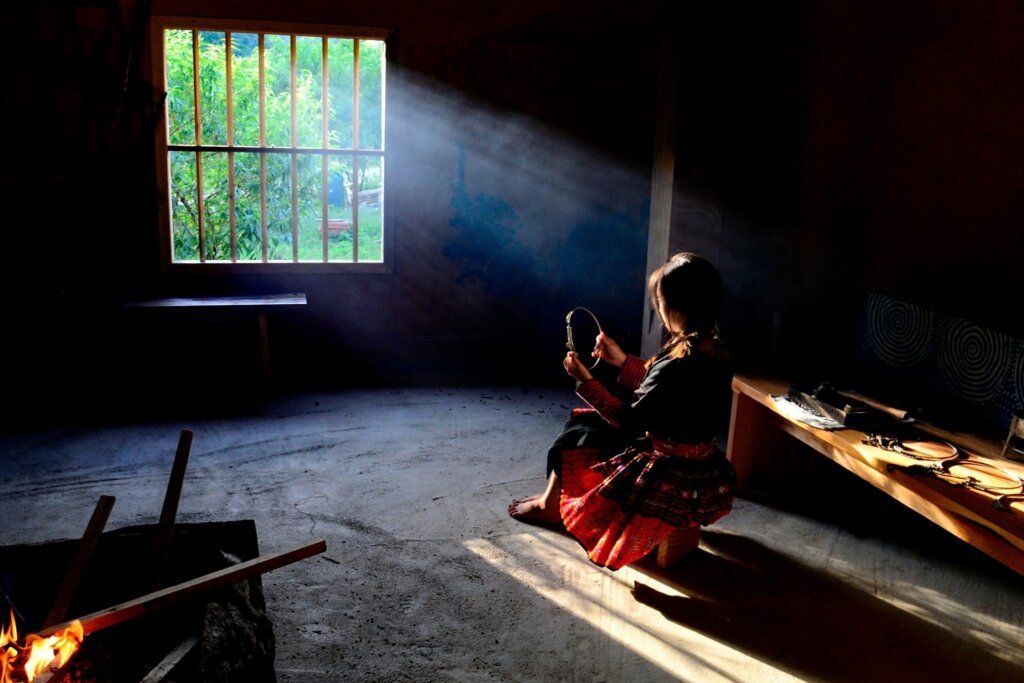
Since 1 July 2025, Mai Chau has been part of Phu Tho Province. On that date Phu Tho, Vinh Phuc and Hoa Binh were merged into a single province named Phu Tho, and the former Mai Chau District was reorganised into communes under the new province. Older websites, maps and booking pages may still say “Mai Chau, Hoa Binh”. Both names point to the same valley, and searching for “Mai Chau” on its own gives the best results for hotels and transport.
Mai Chau and the places visitors combine with it
How far is Mai Chau from Hanoi and how do you get there?
Mai Chau is about 130 to 140 km from central Hanoi by road, depending on the route and your starting point. Most visitors take a limousine van or bus, which usually takes 3 to 3.5 hours including a rest stop. A private car can be quicker, and the fastest published journeys take about 2.5 hours when traffic is light.
Limousine van and bus: the most popular option
Shared limousine vans of 9 to 13 seats leave Hanoi through the morning and early afternoon and run to Mai Chau town and the valley villages. Published 2026 fares range from about US$8 to US$17 per seat, and a Vietnamese comparison site quoted 290,000 VND (about US$11) as a typical starting price in November 2026. Most operators will drop you at or near your homestay if you give the address in advance. Weekends are busy, so book a day or two ahead, and message the operator the day before to confirm the exact pickup point, which is the most common complaint in traveler reviews.
Local public bus
Seat-only buses from Hanoi’s My Dinh bus station and other terminals typically cost about US$4 to 9, but they are slower (around 4 hours), less frequent and less convenient for reaching villages. They suit budget travelers who are happy to arrange the last few kilometres by motorbike taxi.
Private car or taxi
A private car with a driver costs roughly US$70 to 130 per vehicle each way, with the higher end for larger vans. It is the most flexible option for families, small groups and anyone carrying luggage or camera gear, and it lets you stop at viewpoints on the way. Split between four people it comes to roughly US$18 to 33 each.
Motorbike
Confident riders can ride from Hanoi in a little longer than a car takes, because of traffic leaving the city, and a bike makes the valley and the hill roads easy to explore. Roads are busy near Hanoi and winding in the hills, rain makes surfaces slick, and foreign riders should check current licence and insurance rules before renting. If you are not an experienced rider on Vietnamese roads, a van to Mai Chau and a bicycle on arrival is the safer plan.
From Noi Bai International Airport
Direct airport transfers to Mai Chau by limousine take about 4 hours and cost roughly US$12 to 17 in published 2026 fares, so you can skip Hanoi city on arrival day. A private transfer is simpler if you land late.
| Option | Typical time | Typical cost | Best for |
|---|---|---|---|
| Limousine van | 3 to 3.5 hours | US$8 to 17 per seat | Most travelers |
| Public bus | About 4 hours | US$4 to 9 per seat | Tight budgets |
| Private car | 2.5 to 3 hours | US$70 to 130 per vehicle | Families and small groups |
| Airport transfer | About 4 hours | US$12 to 17 per seat | Arrival day from Noi Bai |
| Motorbike | A little over 3 hours or more | Rental plus fuel | Experienced riders only |
Our own tours start and end in Mai Chau. If you want a Hanoi pickup, contact us and we will quote a transfer.
When is the best time to visit Mai Chau?
The best time to visit Mai Chau is late September to early November, when the rice fields turn gold and the weather is cool and mostly dry, and from March to May, when the paddies are fresh green and temperatures are mild. December to February is cooler but clear and quiet, while June to August is hot, wet and very green, with daytime highs that can reach about 37 degrees Celsius.
Month by month: when Mai Chau is at its best
- JanGood
- FebGood
- MarGreat
- AprGreat
- MayGreat
- JunFair
- JulFair
- AugFair
- SepBest
- OctBest
- NovGood
- DecGood
- Best: golden harvest, cool and mostly dry
- Great: green paddies, mild weather
- Good: clear and quiet, cooler
- Fair: hot, wet and very green
| Season | Months | Rice fields | Weather | Good for | Watch out for |
|---|---|---|---|---|---|
| Golden harvest | Late Sep to early Nov | Ripe and gold, then harvested | Cool to warm and mostly dry, roughly 20 to 28 °C in October | Photography, cycling, village life | Busiest weeks, so book weekends early |
| Green season | Mar to May | Young, bright green paddies | Mild, with spring showers | Walking, cycling, flowers and fresh air | Some rain, and the first crop ripens from about late May |
| Quiet winter | Dec to Feb | Bare or being planted | Cool and dry, January roughly 12 to 20 °C | Long cycling loops, clear views, fewer visitors | Cold mornings and evenings, so bring layers |
| Hot and wet | Jun to Aug | Lush green second crop | Hot, humid, afternoon storms, up to about 37 °C | Pa Co highlands, waterfalls, swimming | Heat, slippery trails, landslide risk on mountain roads after heavy rain |
The timing of the harvest can shift by a week or two between villages and from year to year. If golden rice is the main reason for your trip, aim for the last week of September through the first week of October and ask your host for the current status before you book. Weekends and Vietnamese public holidays (30 April to 1 May, 2 September, and Tet in January or February) are the busiest, with higher prices and fewer rooms.
How many days do you need in Mai Chau?
Two days and one night is the minimum that makes the drive worthwhile, and three days and two nights is the best balance of valley, lake and mountains. A same-day trip from Hanoi is possible but leaves only a few hours on the ground after 6 to 7 hours of round-trip driving.
Two days, one night: the valley essentials
- Day 1. Arrive by late morning and check in at a stilt-house homestay in Lac or Pom Coong. Cycle the village lanes and paddies in the afternoon, then watch the light change from the fields before a family dinner.
- Day 2. Visit a local market if it is a market day, then join a hands-on workshop such as natural dyeing and weaving or bamboo-tube rice. Stop at Go Lao Waterfall on the way back and leave for Hanoi in the afternoon.
Three days, two nights: valley, lake and village (our recommendation)
- Day 1. Spend the day in the valley by bike, with a homestay dinner and an overnight in a stilt house.
- Day 2. Head to Hoa Binh Lake for a boat ride, kayaking, a floating fishing village and a cave, or ride the lakeside trails on our cycling tour around Hoa Binh Lake.
- Day 3. Take a workshop or drive on to Pu Luong for rice terraces, then return to Hanoi.
Four days or more: the Northwest loop
Our complete cycling route links Hoa Binh Lake, Da Bac, Mai Chau and Pu Luong over 4 days and 3 nights, passing five distinct cultures. Walkers can trek from Pu Luong to the Hmong villages of Hang Kia and Pa Co over 2 to 3 days. See the cycling tours and hiking and trekking pages for current routes.
What are the best things to do in Mai Chau?
The best things to do in Mai Chau are cycling through the rice fields, staying in a White Thai stilt house, visiting an ethnic market, joining a craft workshop, exploring Hoa Binh Lake, and day-tripping to Pu Luong or the Hmong highlands. The ten experiences below are ordered roughly from the valley outwards.
1. Cycle through the rice fields and White Thai villages
Cycling is the best way to understand the valley’s scale. Quiet lanes link the stilt-house villages of Lac, Pom Coong, Na Meo and Na Mo with paddies on both sides, and longer routes climb into the hills around Pu Bin and Noong Luong. A relaxed loop takes two to four hours with stops, and most homestays rent bicycles. For a guided ride with village visits and local meals, see our cycling tours, which run from one to four days.
2. Sleep in a traditional stilt house
A night in a White Thai stilt house is the signature Mai Chau experience. The houses stand on wooden posts, with a shared sleeping floor or private rooms upstairs, a communal dinner of sticky rice, grilled meat and forest vegetables, and in some homestays a short cultural performance. Lac and Pom Coong are the best-known villages, and Mai Hich is newer and quieter. Take your shoes off at the door and follow your host’s lead at mealtimes.
3. Visit a local ethnic market
Markets rotate through the week. According to our local guides, Mai Chau and Pa Co markets are held on Sunday mornings, Bai Sang on Wednesday, Tan Mai (Suoi Rut) on Thursday and Bao La on Friday. Expect fresh produce, herbs, forest products and brocade textiles. Market days can shift, so ask your host the evening before, and arrive early. The two Sunday markets are about 30 km apart, so most visitors choose one.

4. Try a hands-on craft workshop
Workshops turn a visit into something you do with your hands. At our workshop hub in Lac 2 village you can dye fabric with plant-based colors and try a simple handloom, make bamboo-tube rice and learn how rice is traditionally winnowed and pounded, weave a bamboo fan or basket, or paint a conical hat, bamboo dragonfly or tote bag. Sessions suit all ages, and you take your creation home. Book ahead through our workshop page.


5. Explore Hoa Binh Lake by boat and kayak
Hoa Binh Lake is the huge reservoir formed on the Da River by the Hoa Binh Dam, and some of the Thai, Muong and Dao families who live around it resettled from valleys that were flooded. A full-day exploration can include a floating fishing village, kayaking in a quiet bay, Go Lao Waterfall, the Hoa Tien cave, a short walk to a jade-colored forest lake and a soak in a hot spring. Our Hoa Binh Lake exploration costs from 1,200,000 VND per person and includes entrance fees.

6. Cycle around Hoa Binh Lake
This full-day ride covers about 30 to 35 km along lakeside trails past hamlets, with three short boat transfers and a traditional lunch with a local family. It passes close to the Hoa Binh Dam, a landmark of Vietnamese-Soviet cooperation, and meets Thai, Muong and Dao villagers along the way. Our cycling tour around Hoa Binh Lake starts from 1,600,000 VND per person, departs from Xom Lac in Chieng Chau commune, and includes a mountain bike, helmet, English-speaking guide, support vehicle, lunch and entry fees. Moderate fitness is enough.
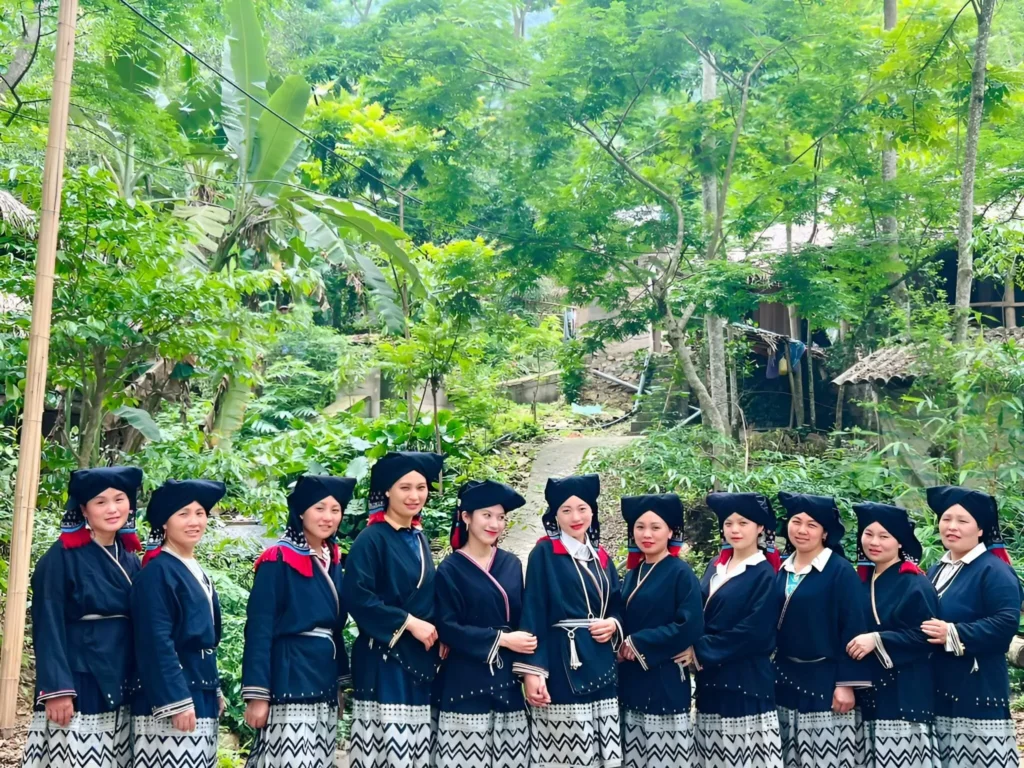
7. Meet the Dao Tien at Sung Village
Sung Village sits high above the Da River in Da Bac and is home to the Dao Tien people, who still wear embroidered clothing every day. The trip starts with a boat ride across the lake, followed by a car transfer, so no trekking is needed to arrive. Guests make do paper from tree bark, try beeswax batik and indigo dyeing, eat with a host family, and sleep in a stilt-house dorm or a private room. The next morning there is an easy forest trek to a limestone cave and old Shan Tuyet tea trees. Our two-day Sung Village tour starts from 2,900,000 VND per person, needs at least 4 guests, and is not advised for children under 6.

8. Drive up to Hang Kia and Pa Co
West of the valley, the road climbs to the Hmong villages of Hang Kia and Pa Co, where the air is noticeably cooler, which makes it a welcome escape in summer. You will find fields of seasonal crops and flowers, mountain views and a Sunday market at Pa Co. It works as an easy day trip from Mai Chau or as part of a 2 to 3 day trek, described on our hiking and trekking page.
9. Add a day in Pu Luong Nature Reserve
Pu Luong is about 35 km from Mai Chau and is famous for sweeping rice terraces, forested ridges, streams and Thai and Muong villages. Highlights include the S-shaped road near Don village, Hieu Waterfall (best from May to November), bamboo rafting on Cham Stream, Kho Muong village and its bat cave, and, for strong walkers, the 1,700 m summit. Entry fees at the main sights are small; the details are in our Pu Luong guide.


10. Catch waterfalls and valley views
Go Lao Waterfall is an easy stop with a short walk, and mountain passes such as Thung Khe give sweeping views over the valley when the weather is clear. For the softest light, plan viewpoints for early morning or late afternoon, and check the forecast first because haze and cloud can hide the view.
Who lives in Mai Chau, and how do you visit respectfully?
Mai Chau is home to several ethnic communities. The five you are most likely to meet on a trip through the valley, the lake and the surrounding hills are the White Thai, Hmong, Muong, Dao Tien and Black Thai. Each has its own architecture, clothing and food, so one route can feel like several different places.
| Group | Where you meet them | What stands out |
|---|---|---|
| White Thai | Valley villages such as Lac, Pom Coong, Na Meo, Na Mo, Pu Bin and Noong Luong | Wooden stilt houses, rice farming, brocade weaving and homestay hospitality |
| Hmong | Highland villages around Hang Kia and Pa Co | Cooler mountain air, seasonal crops and flowers, Sunday market |
| Muong | Villages around Van Son, Lung Van and the Hoa Binh Lake region | Traditional Muong communities with stilt-house life |
| Dao Tien | Sung Village in Da Bac and along the Da River | Embroidered daily dress, do paper, beeswax batik, indigo dyeing, herbal knowledge |
| Black Thai | Hieu and Khuyn villages in Pu Luong | Terrace farming and village homestays |
Etiquette that hosts appreciate
- Ask before photographing people, especially children and elders.
- Take your shoes off before entering a stilt house, and avoid stepping on the doorstep.
- Dress modestly in villages, with shoulders and knees covered.
- Buy textiles and crafts directly from the makers and agree on a price before you pay.
- Carry cash in small notes, because many villages have no card machines.
- Ask permission before flying a drone, and never fly over homes.
How you travel matters here. Our small groups are capped at fewer than 20 guests, we hire local families and guides, and at least 10% of our profits go to livelihoods, vocational scholarships, sanitation and clean water for disadvantaged families. You can read more in How your trip can support local communities.
Where should you stay in Mai Chau?
For a first visit, stay in a stilt-house homestay in Lac or Pom Coong, where you can walk or cycle to the paddies and eat with a family. If you want a pool, a private bathroom and quiet, choose a bungalow or resort in the valley. Prices run from about 100,000 VND for a shared dorm bed to 3,000,000 VND and more for a resort room.
| Area | What it is like | Best for |
|---|---|---|
| Lac village (Ban Lac) | The best-known White Thai stilt-house village, with dozens of homestays, shops and a lively evening | First-time visitors and culture |
| Pom Coong | A smaller stilt-house village with some of the cheapest beds | Backpackers and tight budgets |
| Mai Hich | Newer homestays about 10 km from Lac village, quieter | Slower, more local stays |
| Valley bungalows and eco-lodges (Na Thia, Hai Son, Suoi Lon) | Rice-field or lake views, private bathrooms, pools and spas | Couples and families |
| Mai Chau town | Simple hotels, restaurants and bus stops | One night in transit |
| Pa Co highlands | Hmong homestays and cool air | Summer escapes and trekkers |
Book early for weekends and for late September to October. Message your host to confirm meals, check-in time and the pickup point from the bus. If you are booking a guided trip with us, we arrange homestays for you, and you can choose a standard hotel, a homestay dorm or a private homestay room.
What should you eat in Mai Chau?
Meals in Mai Chau are simple and generous: sticky rice, bamboo-tube rice (com lam) cooked over charcoal, grilled pork or chicken, river fish from Hoa Binh Lake, and stir-fried forest vegetables and bamboo shoots, often shared on a floor mat with your host family. Many hosts also offer rice wine drunk communally through long bamboo straws. Accept a sip as a welcome gesture, and decline politely if you prefer not to drink. Vegetarian meals are usually possible if you ask ahead.
How much does a trip to Mai Chau cost?
A two-day trip from Hanoi typically costs about US$60 to 150 per person for transport, a homestay or mid-range room and meals, rising to US$200 or more with a resort or a guided multi-day tour. The table below lists the building blocks. All figures are estimates, converted at roughly 25,000 to 26,000 VND per US dollar.
| Item | Typical cost | Notes |
|---|---|---|
| Limousine van from Hanoi | US$8 to 17 per seat, one way | Published 2026 fares |
| Private car from Hanoi | US$70 to 130 per vehicle, one way | Depends on vehicle size |
| Homestay dorm bed | 100,000 to 250,000 VND per person | Dinner and breakfast are often extra or about 150,000 VND with a meal |
| Private homestay room | 200,000 to 300,000 VND per person | Shared bathroom is common |
| Hotel or bungalow | 300,000 to 1,500,000 VND per room | Wide range by season and view |
| Resort or boutique lodge | 1,500,000 to 3,000,000 VND and up per room | Pools, spas and activities |
| Hoa Binh Lake exploration (our tour) | From 1,200,000 VND per person | Full day, kayaking and entry fees included |
| Cycling around Hoa Binh Lake (our tour) | From 1,600,000 VND per person | Bike, guide, lunch, boats and support vehicle included |
| Sung Village two-day tour (our tour) | From 2,900,000 VND per person | Meals, stay and workshops included, minimum 4 guests |
| Pu Luong sights | Entry 10,000 VND at several sights, bamboo rafting about 70,000 VND | From our Pu Luong guide, subject to change |
The two-day range is our estimate from the figures above and assumes shared transport, a basic room and local meals, not a precise quote. Our tour prices are starting prices that vary with group size and season, so confirm them when you book.
What should you pack, and how do you stay safe?
What to pack
- Comfortable walking shoes or trail shoes with good grip, especially for Pu Luong and Sung Village.
- Layers: a light jacket for cool evenings from October to March, and a rain jacket in any season.
- Sun protection: hat, sunglasses and sunscreen for cycling and lake days.
- Insect repellent, a small torch, and a power bank, because village signal and electricity can be patchy.
- A towel and swimwear if you plan to kayak, swim or visit a hot spring.
- Small-denomination cash in Vietnamese dong, and a light daypack.
Staying safe and comfortable
- Wear a helmet when cycling and ride single file on shared roads.
- Check the forecast before mountain drives. After heavy rain in summer, roads can be slippery and trails muddy.
- Drink bottled or boiled water and take any personal medication with you.
- Tell your host or guide about food allergies and mobility limits, so they can adjust routes and meals.
- Choose experienced, licensed operators for boat and kayak trips and wear the life jacket provided.
Mai Chau, Pu Luong, Moc Chau or Sapa: which is right for you?
Choose Mai Chau if you want an easy, culture-focused trip within about three hours of Hanoi, with good homestays and gentle cycling. Choose Pu Luong for wilder terraces and hiking, and consider both together on a three or four day loop. Moc Chau suits tea hills and highland scenery, and Sapa suits high peaks, with longer journeys and often cooler, foggier weather.
| Destination | From Hanoi | Landscape | Feel | Best months |
|---|---|---|---|---|
| Mai Chau | 130 to 140 km, 3 to 3.5 hours | Broad valley, paddies, stilt villages, lake | Easy, cultural, well set up for visitors | Sep to Nov, Mar to May, clear winter days |
| Pu Luong | About 4 hours | Terraced slopes, forest, streams | Wilder, more hiking, simpler facilities | May to Nov for green terraces, Sep to Oct for gold |
| Moc Chau | Roughly 4 hours | Highland plateau and tea hills | Open and scenic, popular with weekenders | Check local seasons before booking |
| Sapa | Roughly 5 to 6 hours | High mountains and large terraces | Busy, cooler, often foggy | Sep to Oct and Mar to May |
For a longer read, see our guides to 5 unmissable things to do in Mai Chau, why Mai Chau is a peaceful hidden gem and slow travel in Vietnam.
How can Mai Chau Local Tour help you plan?
Mai Chau Local Tour is a locally run operator offering small-group, private tours of fewer than 20 guests, with routes and timings chosen to avoid crowds. We can arrange as much or as little as you want, from a single workshop to a multi-day journey across the Northwest.
- Cycling tours: 1 to 4 days across Hoa Binh Lake, Da Bac, Mai Chau and Pu Luong.
- Hiking and trekking: 2 to 3 days around Pu Luong and the Hmong highlands, moderate to challenging.
- Hoa Binh Lake exploration: a full day on the water, from 1,200,000 VND per person.
- Da Bac and Sung Village: two days with the Dao Tien, from 2,900,000 VND per person.
- Craft workshops: dyeing, weaving, bamboo craft and rice processing.
Tell us your dates, group size and fitness level on the custom trip page, or email maichaulocaltour@gmail.com.
Mai Chau travel FAQ
Is Mai Chau worth visiting?
Yes, if you want rice fields, stilt-house villages, cycling and a slower pace within about three hours of Hanoi. It suits travelers who prefer village life, nature and craft experiences to nightlife or big sights, and it works well as a 2 to 3 day trip.
How far is Mai Chau from Hanoi?
Mai Chau is about 130 to 140 km from Hanoi by road. A limousine van or private car usually takes 3 to 3.5 hours, and the fastest journeys take about 2.5 hours in light traffic.
Can you visit Mai Chau as a day trip from Hanoi?
You can, but a day trip means 6 to 7 hours of driving for only a few hours in the valley. Stay at least one night so you can cycle, join a workshop and see the villages in good light.
What is the best month to visit Mai Chau?
September and October are best for golden rice and cool, mostly dry weather. March to May is excellent for green paddies and mild temperatures, and December to February is clear, quiet and cool.
When are the rice fields golden in Mai Chau?
The main harvest turns the fields gold from late September to early October, with a smaller early harvest around late May to June. Timing shifts by village and year, so ask your host before you travel.
How many days should you spend in Mai Chau?
Two days and one night is the minimum, and three days and two nights is ideal if you want to add Hoa Binh Lake, Pu Luong or the Hmong highlands. Four days lets you ride or walk a full Northwest loop.
Is Mai Chau in Hoa Binh or Phu Tho?
Mai Chau is now in Phu Tho Province. Hoa Binh, Vinh Phuc and Phu Tho merged into a single province named Phu Tho on 1 July 2025, so older sources may still say Hoa Binh.
What is Mai Chau famous for?
Mai Chau is famous for its White Thai stilt-house villages, rice-field scenery, homestays, brocade weaving and cycling. It is also a gateway to Hoa Binh Lake, the Hmong highlands of Hang Kia and Pa Co, and Pu Luong Nature Reserve.
How do you get from Hanoi to Mai Chau?
Most visitors take a limousine van, costing about US$8 to 17 per seat, or a private car at roughly US$70 to 130 per vehicle. Cheaper public buses and airport transfers from Noi Bai also run, and our team can arrange a transfer.
How much does a trip to Mai Chau cost?
A homestay bed costs about 100,000 to 300,000 VND a night, a limousine seat about US$8 to 17 each way, and guided full-day activities start around 1,200,000 VND per person. A basic two-day trip from Hanoi is often US$60 to 150 per person.
Is Mai Chau suitable for families and older travelers?
Yes. The valley is gentle, homestays are welcoming, and many activities are easy. Some trips, such as the Sung Village tour, are not advised for children under 6, and steep treks need good fitness, so tell us your group’s needs and we will choose suitable routes.
Should you choose Mai Chau or Pu Luong?
Choose Mai Chau for easy cycling, culture and comfortable stays, and Pu Luong for wilder terraces and hiking. They are about 35 km apart, so many travelers combine them on a three or four day trip.
Do you need to book homestays in advance?
Book ahead for weekends, public holidays and late September to October, when rooms fill quickly. On quiet weekdays you can often arrange a bed a day or two before, but messaging your host first is still wise.
Is English spoken in Mai Chau?
Basic English is common at established homestays, hotels and tour operators, and less so in remote villages. A local guide helps with translation and makes introductions easier.
Sources and how we checked this guide
This guide combines our own experience guiding in Mai Chau with published information checked in November 2026. We cite the sources below, and we mark estimates where prices or timings vary. Fares, fees and market days can change, so confirm details before you travel. If you spot an error, email us at maichaulocaltour@gmail.com and we will correct it.
- Administrative change: VietnamPlus, government approval of the commune-level mergers and VnEconomy, resolutions on the provincial mergers.
- Mai Chau as a commune under Phu Tho: Wikipedia, Mai Chau.
- Transport times and fares: 12Go, Hanoi to Mai Chau, Vietnamtourism, Hanoi to Mai Chau and Rome2rio, Hanoi to Mai Chau.
- Seasons and weather: Local Vietnam, best time to visit Mai Chau and Vietnamtourism, Mai Chau weather by month.
- Accommodation ranges: Vietnamtourism, where to sleep in Mai Chau.
- Tours, prices, markets and local details: our own pages and guides on this site.